AVENUE / EARLY LEARNING

Preschool Pop-Up

A temporary classroom built around encounter, exploration, and shared learning.

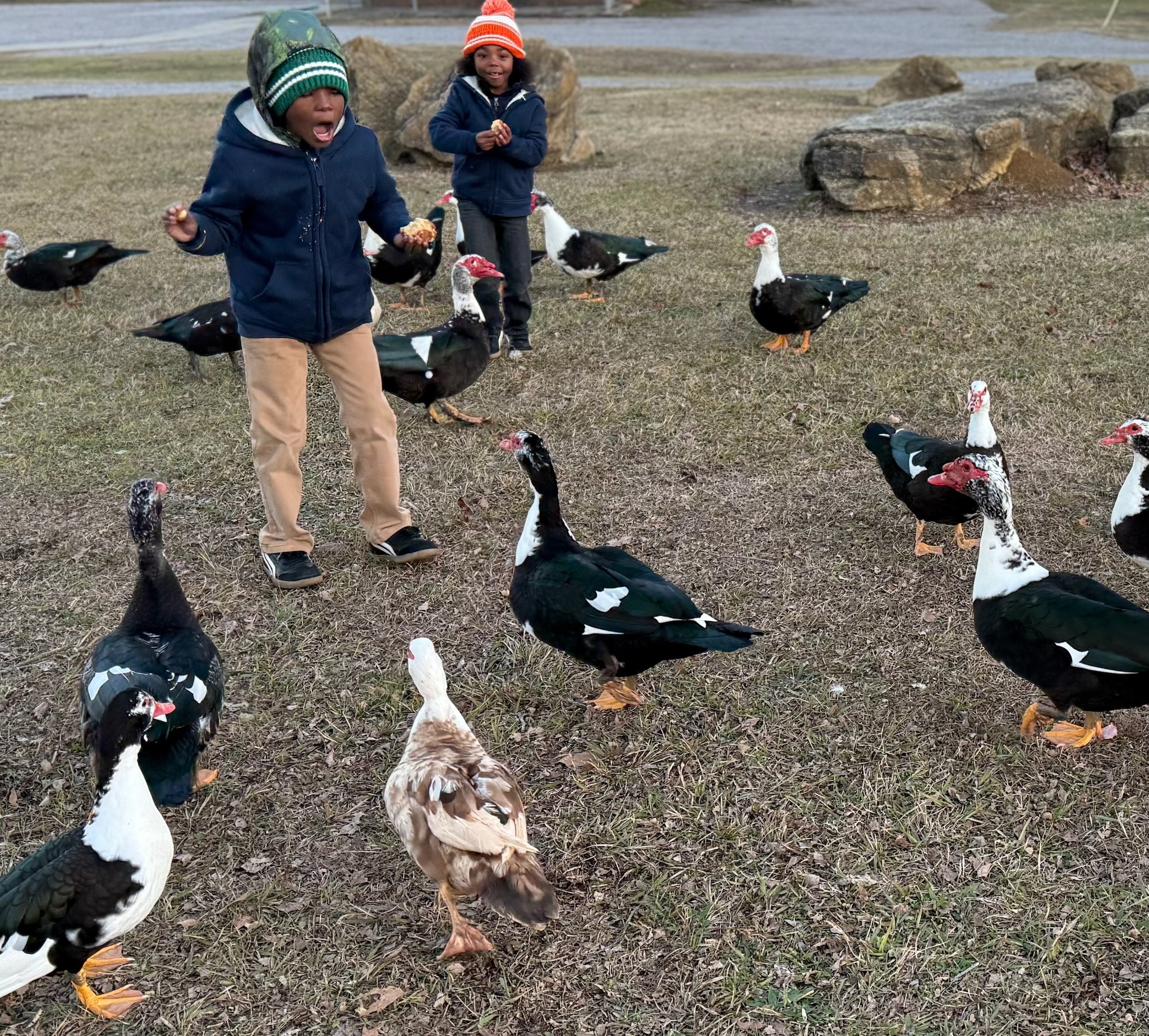
Children encountering ducks outdoors

The Work

Preschool Pop-Up brings rich early-learning experiences into the places where families already live and gather.

Designed for young children and their accompanying adults, each installation creates a temporary learning environment around a purposeful encounter. Children explore through play, observation, conversation, movement, materials, and place while parents and guardians get close enough to see learning happen.

The premise is simple: families cannot choose an educational experience they have never been given meaningful access to see. Preschool Pop-Up makes the experience visible, participatory, and portable. The encounter ends; the adults, language, questions, and ways of noticing go home with the child.
The Experience

01

Place

Begin with what is already there

Before an installation, the site is studied for its affordances, inhabitants, rhythms, resources, barriers, relationships, and possibilities. Place becomes part of the learning material rather than a neutral backdrop.

02

Encounter

Design for exploration

Questions, materials, movement, conversation, observation, nature, and the environment are composed into an experience that invites children to investigate rather than simply receive information.

03

Caregiver Participation

Adults stay close

Preschool Pop-Up is parent-accompanied, not drop-off care. Adults participate alongside children, seeing the learning process rather than receiving a report about it afterward.

04

Observation

Learn to notice what is already happening

Families are given language for recognizing agency, oral language, mathematical thinking, problem-solving, self-regulation, curiosity, relationship, creativity, and other forms of development as they emerge in real time.

05

Continuation

The encounter travels home

Field invitations, questions, conversation, and simple extensions carry discoveries into family life. The goal is not only what happens during the hour, but what families become able to notice and continue afterward.

06

Documentation

Make the learning visible

Observations, artifacts, photographs, facilitator notes, and participant reflection can document what occurred and inform families, hosts, future installations, and the continuing development of the work.

An Installation

A Pop-Up is a delivery avenue: the educational work can change while the family-accompanied, community-based format remains recognizable.

A typical four-week installation can include eight live encounters with a small cohort of approximately 12 child-caregiver pairs—nearly 100 participant-hours before the preparation, documentation, and learning that continue outside the sessions are counted.

Installations can carry existing Ms. Amber’s Class curricula or work commissioned for a particular place, population, or purpose. Each one is shaped by its site while preserving the recognizable Pop-Up format.

Why Pop-Up?

Families cannot choose an educational experience they’ve never been given meaningful access to see.

Preschool Pop-Up creates that access by placing families inside the experience. Adults do not have to imagine what exploratory, child-centered learning looks like from a brochure; they can watch it unfold, participate in it, ask questions, and carry what they learn into everyday family life.

Access can be underwritten by a sponsoring organization or community partner so families participate without carrying the full cost themselves. The organization commissions the work; the families experience it.

Bring Preschool Pop-Up to your community.

Available for residential communities, churches, community organizations, schools and early-learning partners, and other organizations seeking a designed family learning experience.